Over the 20 or so years we have worked with FES cycling, the most frequent question we are asked is, "Will an FES bike actually increase my leg muscle, or will it just slow down the wasting?" The underlying question that matters even more is almost certainly "if I'm not trying to walk again, is it worth the money just for that?"
These are great questions to ask, and they deserve a better answer than the one the internet currently gives. If you search "does electrical stimulation build muscle", the first page of results is written for gym users: ab belts, recovery gadgets, and training accessories. None of it distinguishes between a muscle you can contract voluntarily and a muscle that has been paralysed by a spinal cord injury. They are different situations with different evidence, and the paralysed case has, in fact, been studied rather thoroughly for over thirty years.
So let me walk through what the research actually measures when people with spinal cord injuries train on FES cycling systems. The short version is that you are buying two different things: a change in muscle size and a change in tissue quality. The size effect is one of the most consistent findings in spinal cord injury research. The quality effect is real but partial, slower to arrive, and it fades if you stop. Knowing which is which will help you decide whether the investment makes sense for you.
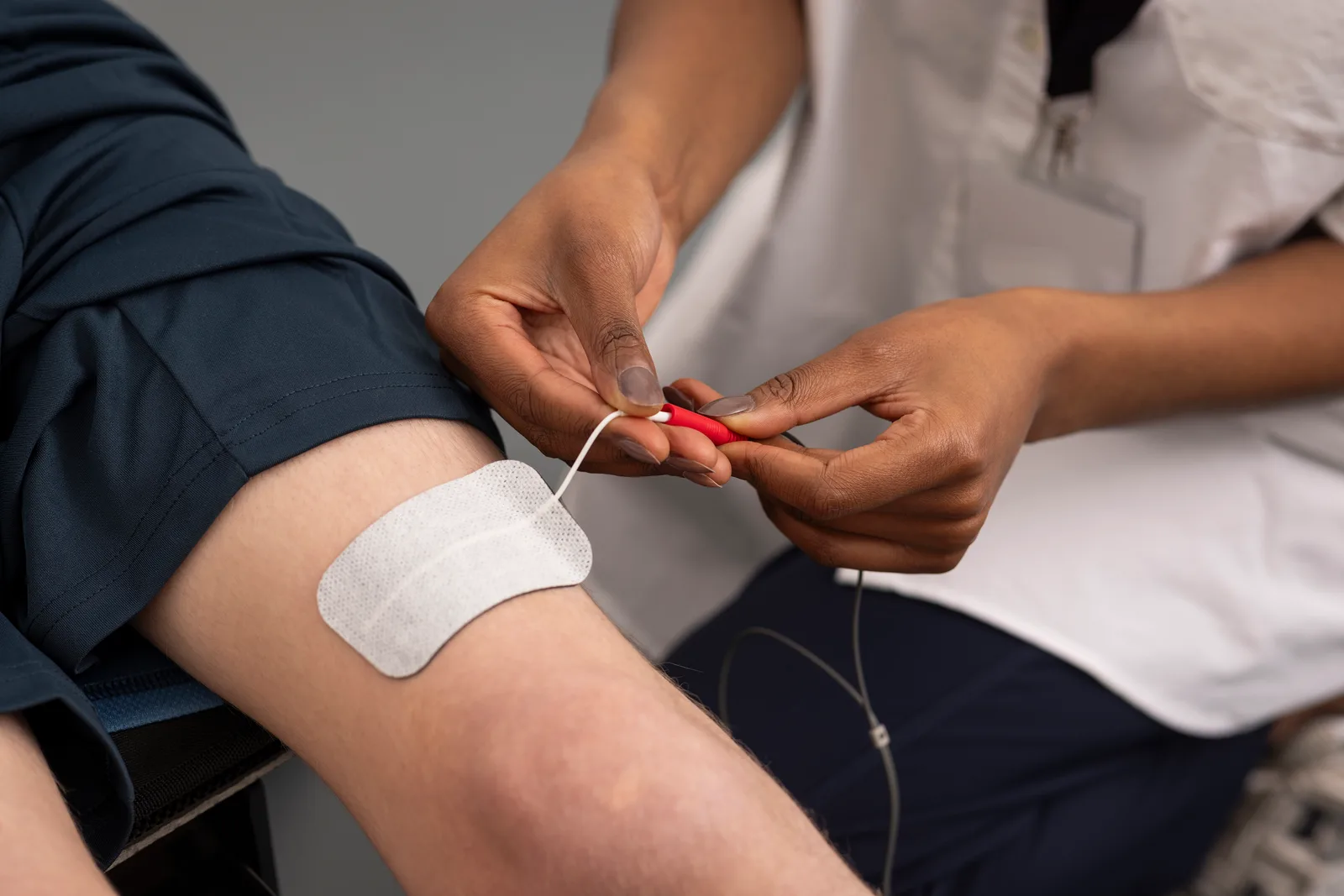
What happens to paralysed muscle if you do nothing
First, let's consider the baseline case. After a complete spinal cord injury, conscious control of the muscles might be completely lost, and the paralysed muscles shrink quickly. In one careful MRI study that followed people through their first six months, the quadriceps lost about 16% of its cross-sectional area by 24 weeks, and the calf muscles lost up to 24%. By that point, the muscles were between 45% and 80% of the size seen in matched, uninjured controls.
Something less visible happens at the same time. Fat begins to accumulate inside and between the muscles. In people with incomplete injuries studied just six weeks after injury, the proportion of fat within the thigh muscles was already about three times higher than in uninjured controls, and it increased by a further 26% over the following three months.
This is why I encourage people to think beyond appearance. The concern is not simply that legs look thinner. It is that the tissue itself is changing composition, from muscle towards fat, and that change has knock-on consequences for metabolic health, skin protection and long-term wellbeing. I have covered the case for acting early in a separate article on why FES matters after spinal cord injury.
The size answer
Does FES cycling reverse any of this? On muscle size, the evidence is about as consistent as rehabilitation research gets.
A systematic review published in 2022 pulled together 46 studies involving 414 people with spinal cord injuries who trained with electrical stimulation in its various forms, including FES cycling. Muscle cross-sectional area increased in essentially every study that measured it, by anywhere from 5.7% to 75%, with an average gain of about 26%. A separate review of 92 FES cycling studies rated the evidence for muscle health as "high" using the GRADE system, which is the standard tool researchers use to judge how much confidence a body of evidence deserves.
Individual studies put flesh on those numbers. A twelve-month programme of high-volume FES cycling, close to four sessions a week, produced a 35% increase in thigh muscle cross-sectional area in eleven people with long-standing complete injuries. An earlier one-year study measured a 12% increase in total thigh muscle mass on MRI. A small 2025 pilot using detailed MRI found muscle volume up 36.7% after six months of just two 30-minute sessions per week, although with only four participants I would treat that as encouraging rather than conclusive.
So the direct answer to the headline question is: FES cycling does not merely slow the muscle wasting. In study after study, paralysed muscle trained with electrical stimulation got measurably bigger, often substantially so.
Now the caveat, because there is one. Those gains are in the muscles being trained. Whole-body changes are much smaller. Across the same 2022 review, total lean mass changed by less than 5% on average, and a 2025 meta-analysis of lifestyle and exercise interventions in spinal cord injury found no significant change in overall body fat percentage. FES cycling rebuilds the legs doing the work, it is not promising a whole-body transformation. Of course, the circulatory and other benefits are valuable, but we are focusing on muscle in this article.
The quality answer: the tissue changes character, not just size
As the saying goes, "size is not everything". There is something that is more valuable in a physiological sense.
After a spinal cord injury, paralysed muscle does not just shrink. Over months and years it shifts towards a fast-fatiguing muscle fibre profile, which is why unstimulated muscle tires within seconds when you first try to work it. I have written about that transformation in more detail in A Closer Look at Muscle Fatigue in FES Cycling and Spinal Cord Rehabilitation, so I will keep this brief.
The question is whether training can push the tissue back to its previous state. The best long-term data we have says yes, partially. In the one-year Danish study I mentioned above, researchers took muscle biopsies before and after training. The fastest, most fatigue-prone fibre proteins fell from 63% to 32% of the total, while the more fatigue-resistant intermediate type rose from 33% to 61%. The activity of citrate synthase, an enzyme that marks the muscle's aerobic machinery, roughly doubled. In plain terms, the muscle became better supplied with the equipment for sustained work, which is exactly what you notice as sessions get longer and the early rapid fatigue recedes.
Two further findings deserve mention because they shape how we set FES cycling systems up. First, an eight-week study found that muscle fibres grew by 23% and the number of capillaries feeding them grew by 39%, which means the blood supply grew roughly in step with the fibres rather than ahead of them. Second, an elegant Australian study trained both legs of the same participants with identical stimulation, but loaded only one leg. Only the loaded leg showed gains in fibre size, capillary supply and aerobic enzymes. The current alone was not the active ingredient; the work the muscle did against resistance was. This is one reason a properly adjusted FES cycle, where the muscles genuinely drive the pedals against resistance, is a different proposition from stimulation applied while resting. Most persons starting to use an FES bike will use low resistance and may well fatigue quickly at the beginning. As with any exercise, you have to stick with it long enough to drive some adaptation.
The fat inside the muscle
If muscle size responds reliably and fibre character responds partially, the fat that infiltrates paralysed muscle is the least settled part of the story.
The 2022 review judged the effect of stimulation training on fat within and around muscle to be inconclusive: only two studies showed a reduction, averaging about 10%. One sixteen-week trial makes the point vividly. Participants gained an average of 39% muscle mass, a superb result, while the fat within the muscle changed by essentially nothing. Growing new muscle and clearing out infiltrated fat appear to be different processes, and stimulation is much better at the first than the second.
The most recent evidence adds a twist. In the small 2025 MRI pilot, the fat fraction within the muscle decreased over six months of FES cycling, from 11.1% to 9.1%. One month after training stopped, it had climbed back to 10.9%. Four people, so caution again as this is a really small sample, but the pattern fits everything else we know. Whatever quality gains you make are rented, not owned. They persist for as long as the training does.
How long it takes, and what happens if you stop
Regarding the timescales for receiving the benefits of training, the research points to a slightly unfashionable conclusion. The total amount of weekly training you accumulate matters more than any clever tweak of the stimulation settings. The 2022 review found that weekly training volume predicted muscle growth, while the specific parameters did not. I generally advise clients at the beginning to use stimulation every other day with 20- to 30-minute sessions. It's likely that even greater volumes would be more beneficial, but then again, we all have to weigh up what will be the most effective use of our time. Once a user is properly informed, they can make their own rational choices.
Two practical warnings from the literature are worth passing on. If you start very early after an acute injury, do not be alarmed if the first scans are discouraging. In a small case series of people who began FES cycling within three weeks of injury, muscle size initially fell by up to 16% at six weeks, before recovering. The early weeks after injury are a period of steep natural decline, and stimulation is working against that tide before it turns.
And if you stop training, the gains reverse. A Swiss group followed five people who had completed a year of high-volume FES cycling and then stopped. A year later, only about 22% of the muscle gain remained. The one participant who kept cycling, at reduced volume, retained almost 99% of it. I do not present that to alarm anyone. I present it because a purchase decision should be made with a clear view of the commitment: an FES cycle is not a course of treatment you complete, it is a form of exercise you should continue, exactly as gym training is for the rest of us.
Not everyone responds the same, and it is safe to find out
One more piece of candour. Averages hide variation. When researchers pooled two of their training trials and split participants into stronger and weaker responders, the high responders gained about 29% in thigh muscle, while the low responders gained about 12%. Factors such as spasticity levels and medication appeared to play a part. Notice that even the low responders gained meaningfully, but two people following the same programme can often see different results, and an individual assessment beforehand is the best tool we have for setting realistic expectations. That is also why we always suggest trying a system properly before committing to one, a theme I explored in Is FES Cycling Just a Gimmick?.
On safety, the record is reassuring. A systematic review of adverse events across 38 studies of exercise training in spinal cord injury, including FES programmes, found no serious adverse events. The usual cautions apply, and issues such as autonomic dysreflexia need proper management, but this is a well-trodden path. We request a basic risk assessment before conducting an FES cycling demonstration to identify any potential contraindications. Even when contraindications do exist, they are mostly relative ones that can be managed with some clinical guidance.
What I would take from all this
If you came to this article with the question "will it build muscle or just stop the wasting", here is my summary of thirty years of research, and twenty of our own practice, in three sentences. FES cycling reliably rebuilds the size of the muscles it trains, with an average gain around 26% and sometimes far more. It partially rebuilds the quality of the tissue, shifting muscle fibre types towards fatigue resistance and improving the muscle's aerobic machinery, provided the muscles are genuinely working against load. It has not been shown to reliably clear the fat that infiltrates paralysed muscle, and whatever gains you make will fade over time if the training stops. As our friend and colleague Andrew Galbraith tends to say, "take time for exercise or make time for illness".
Whether that is worth the cost of a system is a personal decision that depends on your injury, your goals and your funding situation, and one thing matters before any of it: your muscles must still have an intact nerve supply for conventional FES to work at all. If there is any doubt, a nerve conduction study will settle it, and I have explained how in The Test That Tells You Whether FES Cycling Can Work for You.
If you are weighing this decision, we are glad to talk it through with you and your clinical team, look at your situation specifically, and give you a realistic view of what you could expect. That conversation costs nothing and commits you to nothing.
Further reading
- Bekhet AH, Jahan AM, Bochkezanian V, Musselman KE, Elsareih AA, Gorgey AS. Effects of electrical stimulation training on body composition parameters after spinal cord injury: a systematic review. Archives of Physical Medicine and Rehabilitation 2022; 103(6): 1168 to 1178. https://doi.org/10.1016/j.apmr.2021.09.004
- van der Scheer JW, Goosey-Tolfrey VL, Valentino SE, Davis GM, Ho CH. Functional electrical stimulation cycling exercise after spinal cord injury: a systematic review of health and fitness-related outcomes. Journal of NeuroEngineering and Rehabilitation 2021; 18(1): 99. https://doi.org/10.1186/s12984-021-00882-8
- Chieh C, Stojic S, Boehl G, et al. Can lifestyle and behavioral interventions improve weight management in individuals with spinal cord injury? A systematic review and meta-analysis. Archives of Physical Medicine and Rehabilitation 2025; 106(4): 580 to 589. https://doi.org/10.1016/j.apmr.2024.10.014
- Mohr T, Andersen JL, Biering-Sorensen F, et al. Long-term adaptation to electrically induced cycle training in severe spinal cord injured individuals. Spinal Cord 1997; 35(1): 1 to 16. https://doi.org/10.1038/sj.sc.3100343
- Frotzler A, Coupaud S, Perret C, et al. High-volume FES-cycling partially reverses bone loss in people with chronic spinal cord injury. Bone 2008; 43(1): 169 to 176. https://doi.org/10.1016/j.bone.2008.03.004
- Frotzler A, Coupaud S, Perret C, et al. Effect of detraining on bone and muscle tissue in subjects with chronic spinal cord injury after a period of electrically-stimulated cycling: a small cohort study. Journal of Rehabilitation Medicine 2009; 41(4): 282 to 285. https://doi.org/10.2340/16501977-0321
- Ryan TE, Brizendine JT, Backus D, McCully KK. Electrically induced resistance training in individuals with motor complete spinal cord injury. Archives of Physical Medicine and Rehabilitation 2013; 94(11): 2166 to 2173. https://doi.org/10.1016/j.apmr.2013.06.016
- Mastropietro A, Peruzzo D, Taccogna MG, et al. Multiparametric MRI assessment of morpho-functional muscle changes following a 6-month FES-cycling training program: pilot study in people with a complete spinal cord injury. JMIR Rehabilitation and Assistive Technologies 2025; 12: e64825. https://doi.org/10.2196/64825
- Crameri RM, Cooper P, Sinclair PJ, Bryant G, Weston A. Effect of load during electrical stimulation training in spinal cord injury. Muscle and Nerve 2004; 29(1): 104 to 111. https://doi.org/10.1002/mus.10522
- Chilibeck PD, Jeon J, Weiss C, Bell G, Burnham R. Histochemical changes in muscle of individuals with spinal cord injury following functional electrical stimulated exercise training. Spinal Cord 1999; 37(4): 264 to 268. https://doi.org/10.1038/sj.sc.3100785
- Gorgey AS, Dudley GA. Skeletal muscle atrophy and increased intramuscular fat after incomplete spinal cord injury. Spinal Cord 2007; 45(4): 304 to 309. https://doi.org/10.1038/sj.sc.3101968
- Castro MJ, Apple DF, Hillegass EA, Dudley GA. Influence of complete spinal cord injury on skeletal muscle cross-sectional area within the first 6 months of injury. European Journal of Applied Physiology and Occupational Physiology 1999; 80(4): 373 to 378. https://doi.org/10.1007/s004210050606
- Gorgey AS, Goldsmith JA, Khalil RE, et al. Predictors of muscle hypertrophy responsiveness to electrically evoked resistance training after spinal cord injury. European Journal of Applied Physiology 2023; 123(3): 479 to 493. https://doi.org/10.1007/s00421-022-05069-0
- Everaert DG, Okuma Y, Abdollah V, Ho C. Timing and dosage of FES cycling early after acute spinal cord injury: a case series report. Journal of Spinal Cord Medicine 2021; 44(sup1): S250 to S255. https://doi.org/10.1080/10790268.2021.1953323
- Warms CA, Backus D, Rajan S, et al. Adverse events in cardiovascular-related training programs in people with spinal cord injury: a systematic review. Journal of Spinal Cord Medicine 2014; 37(6): 672 to 692. https://doi.org/10.1179/2045772313Y.0000000115
Our companion websites
https://www.anatomicalconcepts.com
https://denervatedmuscle.com
Articles on this site are researched and drafted with the help of AI tools, then checked, edited and approved by me. Every citation is verified against the original source before publication.