If you have operated a rehabilitation service for any length of time, your stimulation equipment has probably grown the way most clinics' equipment grows: one device at a time, each bought to solve a specific problem. An FES cycling system here, an NMES strengthening unit there, a TENS device for pain, and more recently, the interesting question of how to offer tSCS, which your clients are asking about. Each has its own operating instructions, its own consumables, and its own corner of staff competence.
That pattern is understandable, but it has costs that do not show up on any single invoice: capital tied up in infrequently used machines, a wider training burden, and the familiar problem of a device that seemed essential at purchase and now sits underused. This article makes the practical case for the opposite approach, consolidating several modalities into a single device, using the Stim2Go as the working example.
What Consolidation Actually Means Here
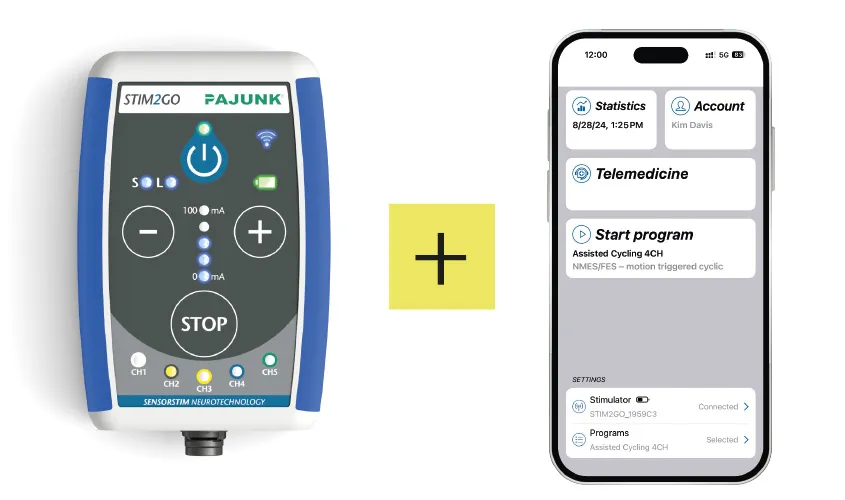
The Stim2Go is a unique stimulator that can be worn on the body. It weighs around 185 grams and is controlled through an iOS or Android app. Stim2Go delivers four forms of electrical stimulation rather than one:
- FES, including FES cycling, with cycle phase detected from the unit's own built-in motion sensors rather than from a cable to the bike.
- NMES, for strengthening and for triggered functional task practice such as sit-to-stand and upper limb exercises such as reaching and grasping.
- TENS, for pain management.
- tSCS, for spasticity and pain, on the same unit and the same workflow.
It ships with more than thirty programme templates across these functions, each customisable, organised by primary function, trigger mode, and channel configuration (1CH to 5CH). The practical effect is that moving a patient, or moving between patients, from one modality to another is a change of programme rather than a change of device.
The Service Case
Three benefits are worth setting out plainly because they affect the whole of service delivery rather than a single session.
Capital efficiency. One versatile unit covering four modalities is a different proposition from four single-purpose devices. For a service, this shifts the conversation from replacing capacity to broadening it. As I noted in the transition article, the per-unit economics have also moved in the right direction since the RehaMove era.
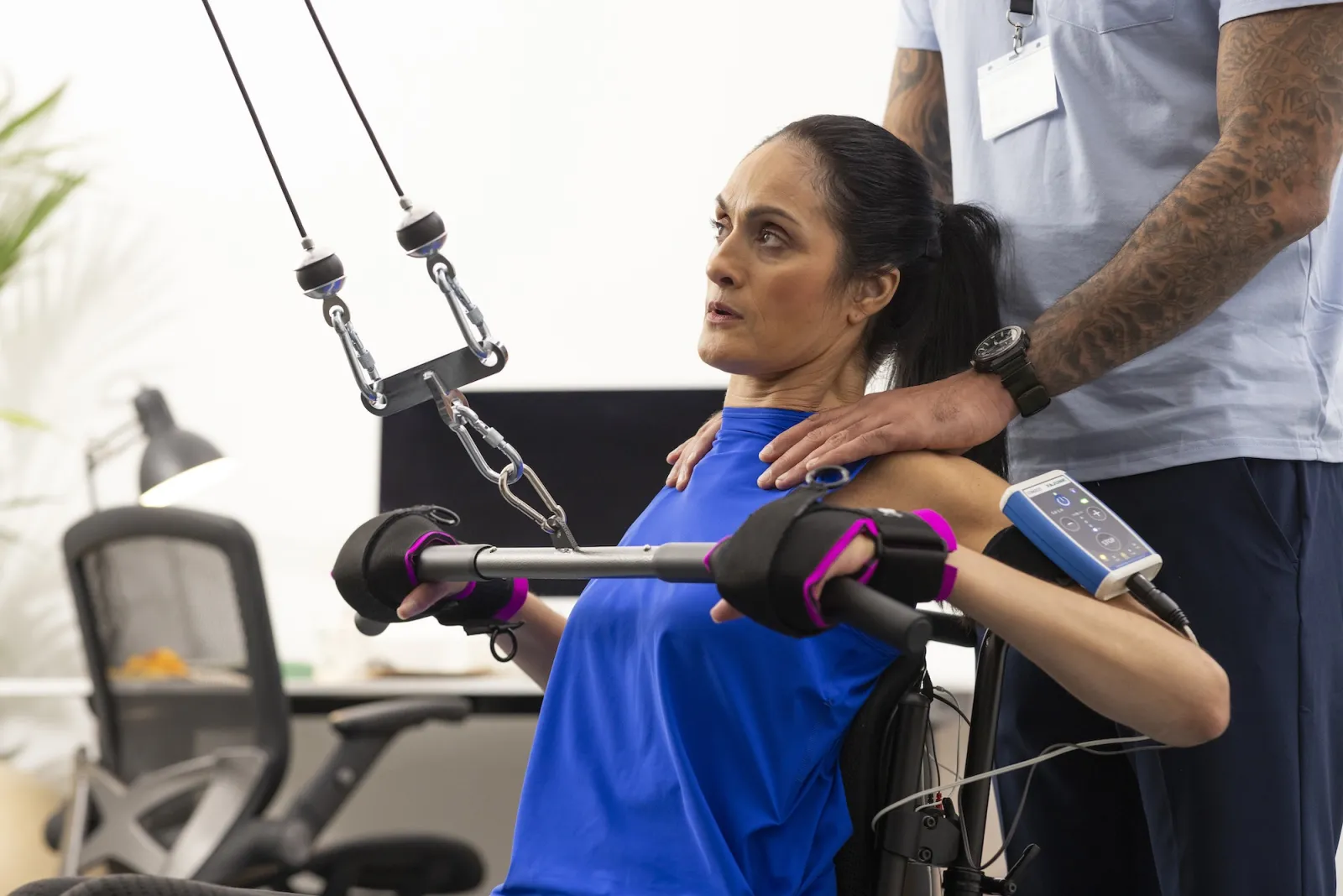
A single workflow. Staff learn one app-based interface and one set of conventions, then apply it across cycling, strengthening, functional task work, pain, and spasticity. That is a narrower training burden than maintaining competence across several consoles, and it lowers the barrier for a clinician to actually use a modality rather than leaving the relevant box in the cupboard.
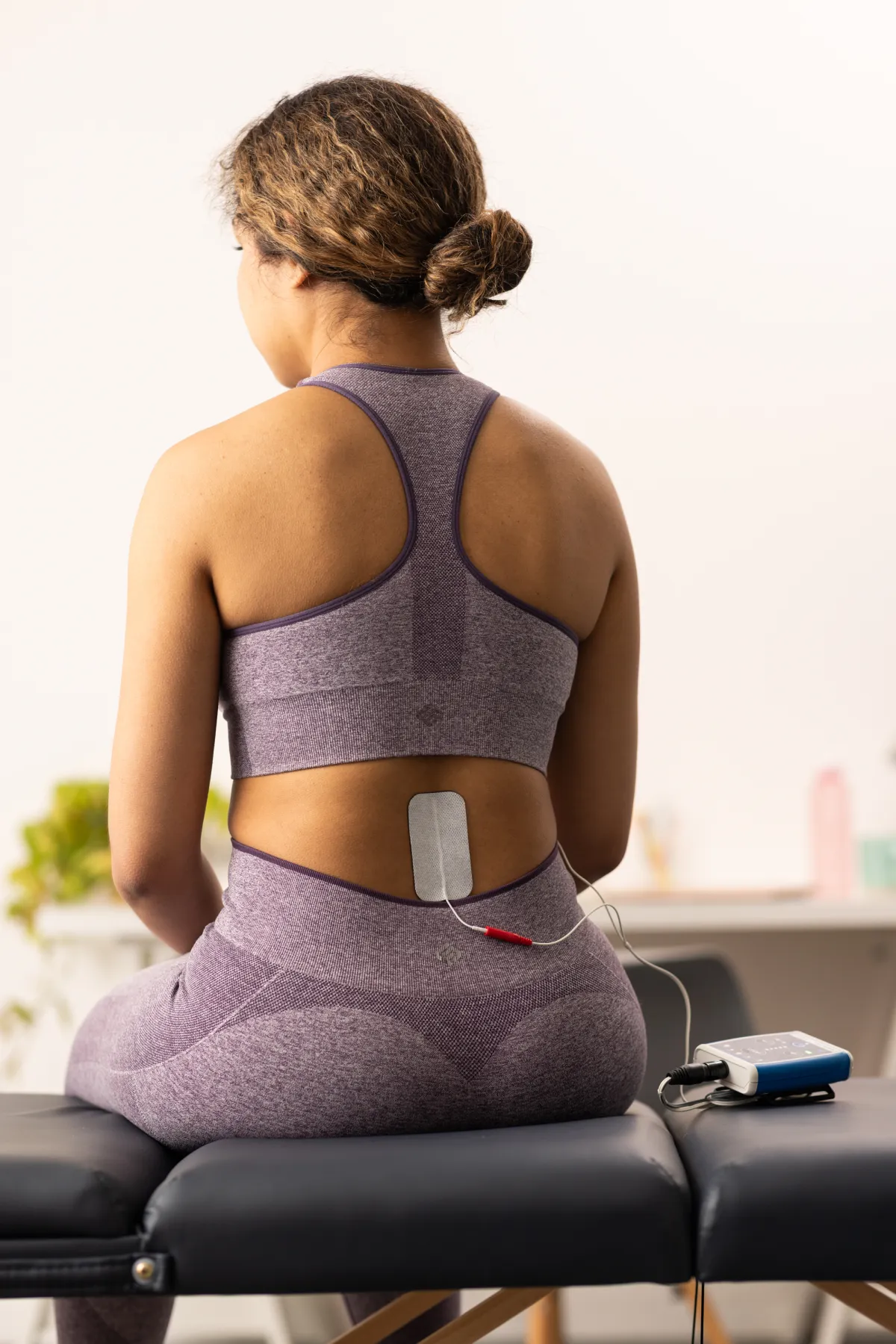
Flexibility across a changing caseload. Patients' needs evolve throughout their rehabilitation, and a caseload is rarely homogeneous. A device that reconfigures by programme follows that variation without a new purchase each time. The unit you bought for FES cycling is the unit that does sit-to-stand NMES next month and tSCS-led spasticity work for a different patient the same afternoon.
Decoupling From the Bike Is Part of the Same Story
The point that consolidation extends to your existing estate is worth repeating, because it surprises people. Because the Stim2Go derives cycle phase from its own accelerometer and gyroscope rather than from bike-side telemetry, it pairs with any active-passive ergometer. A MOTOmed or Thera-Trainer you already own is not made redundant by adopting the device. Consolidating the stimulator does not mean discarding the bike.
Where the Case Stops
A consolidation argument is only as good as its limits, so here are the ones that matter.
- It is for innervated muscle. The Stim2Go targets muscles with intact nerve supply, which covers the great majority of spinal cord injury, stroke and other neurological conditions. It is not a device for denervated muscle, where lost nerve supply demands the long pulse durations and specialised parameters of a system such as the RISE.
- Versatility is not equal evidence across every function. The FES cycling and tSCS literature is more developed; device-specific outcome data for the newer functional applications is still thin, as it is for most current devices. The breadth of capability is not the same as the depth of evidence in each area.
- Consolidation does not remove the need for assessment. One device covering four modalities still requires the same screening, the same parameter judgement, and the same clinical reasoning per application. The device is broad; the clinical decisions remain specific.
The Practical Summary
Most clinics accumulate stimulators one purpose at a time, and pay for it in tied-up capital, scattered competence, and underused boxes. A device that brings FES, NMES, TENS and tSCS into one body-worn unit and one app changes that equation: it broadens capacity rather than replacing it, narrows the training burden to a single workflow, and flexes across a changing caseload without a new purchase each time. It is a strong general-purpose tool for innervated-muscle and nerve neurorehabilitation, not a universal one, and the denervated-muscle exception and the uneven evidence base are part of the picture, not footnotes to hide.
If you would like to see one unit set up across several applications, or to think through how it would sit in your service alongside what you already run, please get in touch.
Further Reading
- Pajunk Stim2Go product page. https://pajunk.com/products/neurology-neurorehabilitation/fes-nmes-tens/stim2go/
- US FDA 510(k) clearance K230701 for the Pajunk Stim2Go, decision 24 November 2023. https://www.accessdata.fda.gov/scripts/cdrh/cfdocs/cfpmn/pmn.cfm?ID=K230701
- Anatomical Concepts (UK). The Stim2go Transition for RehaMove-Trained Physiotherapists. May 2026. https://fescycling.com/blog/the-stim2go-transition-for-rehamove-trained-physiotherapists
- Anatomical Concepts (UK). Stim2Go's Body-Aware Technology is Changing Therapy. 10 June 2025. https://www.anatomicalconcepts.com/articles/stim2gos-body-aware-technology-is-changing-therapy
Have questions about this article?
Get in Touch